

Writing Lessons From... Love, Death and Robots aka The Power of the Short Story
Listen to the blogcast of this episode:
As a fan of long prose, the short story has always been something of an enigma to me. It needs a lot of the same ingredients that you’ll find in a novel or full-length film, but packed into a smaller container.
There’s less room for character development, background and laying down the plot, but these things are all vital for a good story. Everything must happen quickly, without the reader or audience realising, sweeping them along until an ending that makes them stop, reeling from the punch delivered.
At least, that’s how great shorts feel to me.
When Love, Death and Robots appeared on Netflix in 2019, hardly anyone talked about it. I don’t think we even discovered it until 2020, trawling through the TV for obvious reasons, trying to avoid Tiger King and Squid Game, because they were all people could talk about.
Love, Death and Robots is much more up my street. Each volume is a collection of short animated films, each adapted, written and made by different people. The stories vary, the themes vary, the animation style varies.
And, four years later (how is it four years later?!), there are certain episodes that still stick in my head.
And a story sticking in the head is a surefire sign of amazing writing.
I couldn’t write about Love, Death and Robots as a whole, because each story/episode is so different, so I decided to choose three, which turned into four, to focus on. Choosing was incredibly hard because there are so many good ones, whether it’s because they’re entertaining, funny, clever or just suck you into their world.
If you want another three recommendations, you should watch Three Robots (volume one, episode one) and Three Robots: Exit Strategies (volume three, episode one) for two short comedies, Fish Night (volume one) for something surreal, and my husband’s favourite, Mason’s Rats (volume three) which is amazing but I couldn’t quite cope with it!
They are all brilliantly written and well worth a watch.
Wait! From here there are spoilers. You might want to go watch Sonnie’s Edge, Lucky Thirteen, The Tall Grass and Bad Travelling before you read on.
(Love, Death and Robots is available on Netflix. Sonnie’s Edge and Lucky Thirteen are in Volume One, The Tall Grass is in Volume Two and Bad Travelling is in Volume Three.
Disclaimer: If, like me, you avoid rape and sexual violence in your entertainment, then ‘Good Hunting’ (Volume One) and ‘Sonnie’s Edge’ both contain suggestions of, mentions of and borderline depictions of rape. ‘Good Hunting’ is worse and lives rent free in my head. I wish I hadn’t watched it.
‘Sonnie’s Edge’ is only a mention, is used very well, and is why you’ll find it included below.
You have been warned.
Sonnie’s Edge (Volume One)
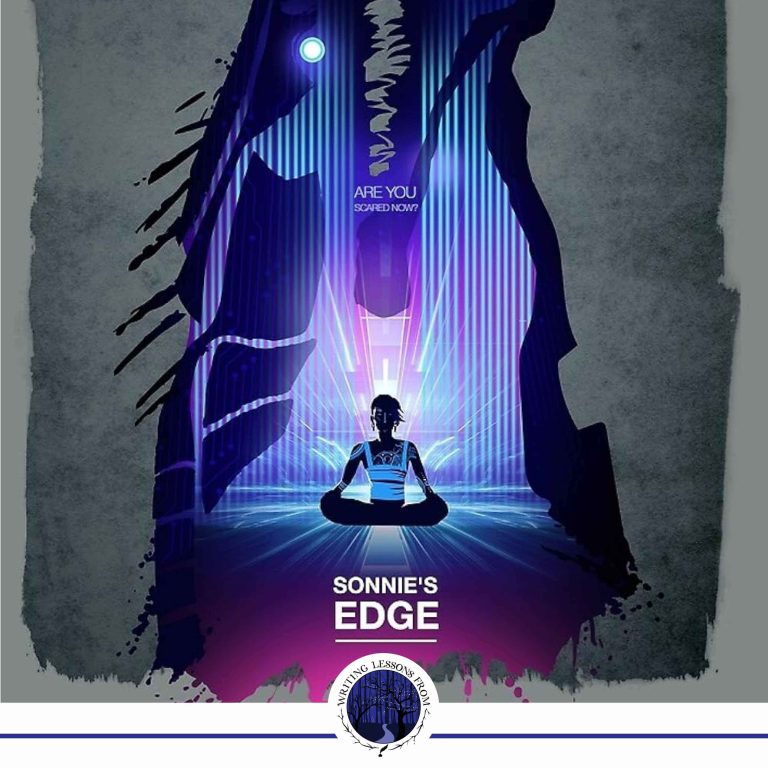
(This short has a rape trigger warning.)
Like I mentioned above, I normally avoid or throw out any story that includes rape or sexual assault. Most of the time, a story doesn’t need it. Thanks to a show that rhymes with fame of bones, rape has become something needlessly included in stories for its shock value, and is probably playing a part in the rise of misogyny in the western world, and can quite frankly fuck off.
However.
There can be a place for horrible, gruesome things in stories if it genuinely propels the story forward.
Which is how it is used in Sonnie’s Edge.
We start in the rich world of monster fighting. Two creatures pitted against one another with humans acting as ‘pilots’, mentally connected to the monsters involved.
Sonnie is the pilot we’re focusing on. The only female pilot in the fighting industry, she’s undefeated. We learn Sonnie’s story immediately – because short stories have to act quickly – discovering that she was the victim of a violent gang rape. Piloting and fighting are her ways of building herself back up.
She refuses the wealthy fight organiser’s bribe to throw the fight and is then ‘punished’ for winning by having her skull caved in as he asks her, ‘Are you scared now?’
The problem is, that ain’t Sonnie. And now she’s angry.
This is a wonderful story with themes around power, fear and monsters.
Monsters tore Sonnie apart in the worst possible way. And she rebuilt herself. She took the fear they gave her and used it to create a stronger version of herself. She used what the monsters gave her and created herself a monster, to endlessly protect herself, undefeated.
This film is so beautifully, sharply written.
Sonnie’s monster is the real deal, the surviving mind of the tormented, abused woman who will not let anyone take her power from her again.
The writing lesson here is to keep your audience guessing. This short is so full of twists, it lulls you into thinking you’re going down one path and then sharply swerves another way.
There is a possibility of romance or salvation from the man’s young lover, of one woman saving another, and then the twist as she tries to kill Sonnie. And then the further twist, the ultimate reveal.
And don’t forget that punch, right at the end.
Sonnie’s Edge is a story of female empowerment against the patriarchy and those who would hurt us. Cause us pain and we will harness our fear, use that hate as fuel and come back as monsters that will haunt your dreams to take you apart piece by piece.
Are you scared now?
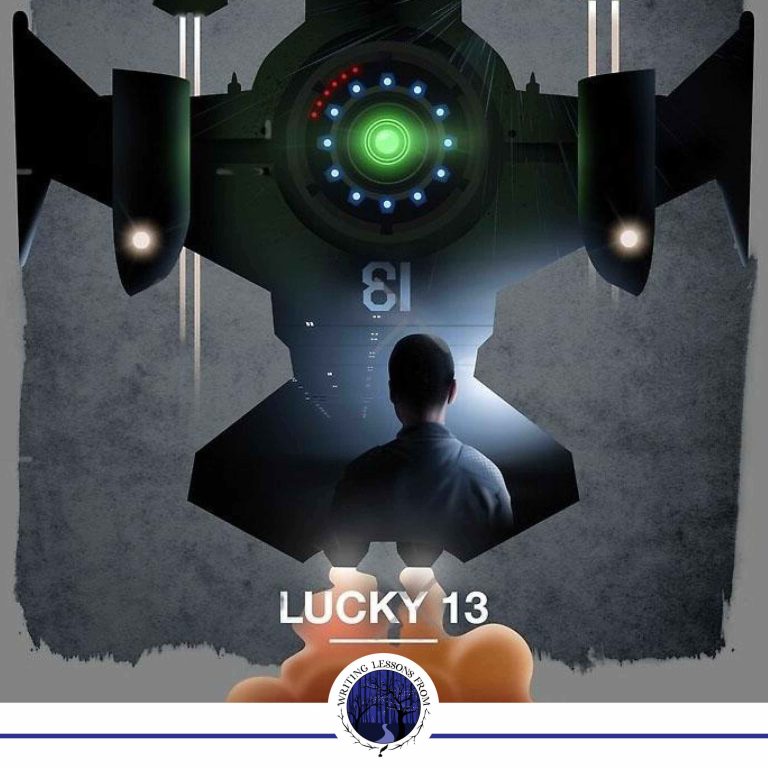
Lucky Thirteen (Volume One)
I admit, I’m a little biased with this one. Inside my head lives a pilot named Crash whose main love is a ship called the Magpie (check out the first book in that series here).
The protagonist of this short, Cutter, and her ship, Lucky 13, remind me lovingly of Crash and the Magpie.
This film is a science fiction story about love, between young pilot Cutter and a ship known as Lucky 13 who has lost her crew twice and has an incredibly unlucky serial number. When going into battle, Lucky 13 is put at the front, because it’s the ship at the front that usually doesn’t make it home.
Cutter is undeterred by the superstition when she’s given Lucky 13. She has faith.
‘Ships have personalities,’ she tells us, as shown throughout the story and the bond between pilot and ship.
They go into battle together over and over, and always come home without a casualty. Cutter turns Lucky 13’s fortune around and her name is no longer said with sarcasm. You want to come home, then you get yourself in Lucky 13.
Until, finally, Lucky 13 is shot down and crashes. Attacked on the ground, Cutter protects the crew as they run, and she’s forced to code in a protocol for Lucky 13 to explode.
The timer counts down and the ship doesn’t explode. Instead, the audience is given the wonderful suggestion that the ship waits until just the right moment, when the enemy is sitting on her wings, to blow and save her crew. A strange, defiant act of sacrifice.
The writing lesson here is that, with good character development, a love story doesn’t have to be a romance between two people. And with clever writing (in this case, glimpses of the story from the ship’s point of view) the mere hint of a suggestion can prove incredibly powerful.
The Tall Grass (Volume Two)
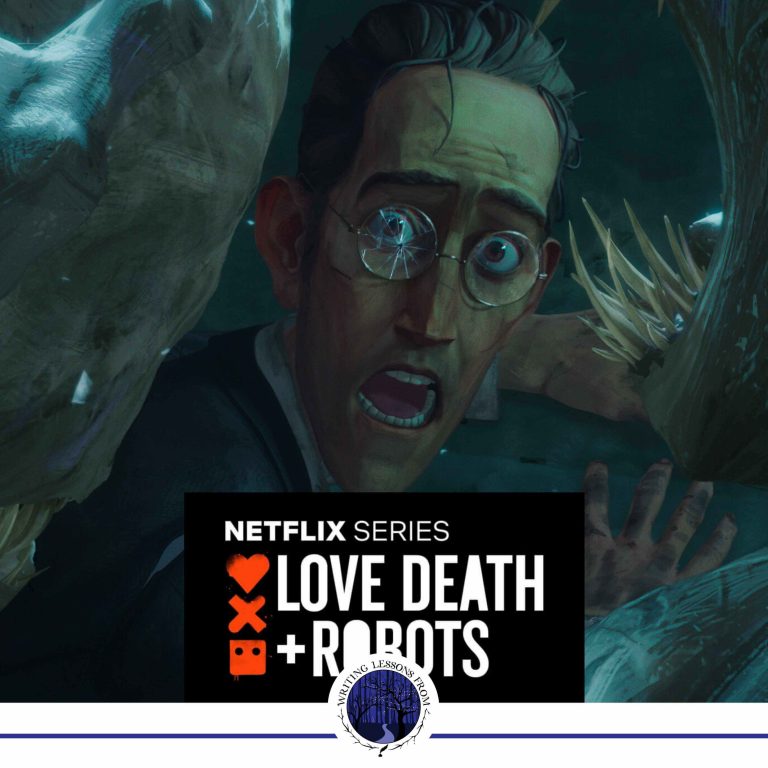
This film has me written all over it, of course it’s included in this list!
A steam train travels through a field of tall grass, under a blanket of stars. When the train comes to a random, unplanned stop, a man travelling on the train spots flashes of light in the grass. Curious, he gets off the train to find out what’s going on and meets a man who works on the train.
He’s allowed to stay off the train for a smoke and is told that he will be called for when the train is leaving, but only twice. Then the train will leave, no matter what.
You can probably guess what happens next. That isn’t really the question this story asks. The important question here is what are those lights?
Of course, our man wanders into the tall grass to find out what they are. This is a man who has never watched Jurassic Park 2: The Lost World.
Hearing the cry of ‘All aboard!’ twice, the man becomes lost and disoriented, discovering the true, terrifying nature of the lights in the tall grass. Zombies? Demons? You probably wouldn’t want to stay still long enough to figure it out.
You might think this story is predictable, but the writing lesson here is about tension, which can be built in such a simple way, by using a primal fear as the story builds.
Here the tension comes from discovering what those lights are, as we ease slowly through the grass, and whether the man will miss his train and be lost forever in that tall grass. Characters die all the time in speculative fiction, we can’t really be sure if he will make it out alive.
This story is such a simple but compelling one, with the full explanation given at the end for a sense of closure. Perhaps my fascination with it was also helped along by the fact that when I first watched this, I had just listened to someone telling of their real-life experience of something similar on a paranormal podcast.
Bad Travelling (Volume Three)
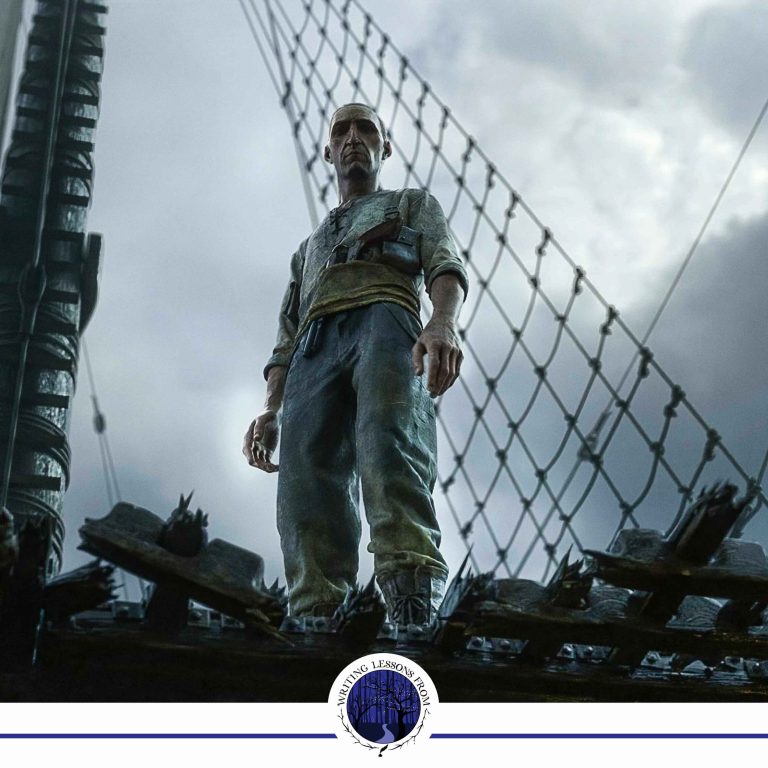
A science fiction story set on alien oceans, Bad Travelling harks back to the lore of seventeenth century hunting ships being attacked by sea monsters. It starts with action – always a great way to start your fantasy/sci-fi story – with the crew being attacked by a giant crab who hunkers down in the depths of the ship. The survivors draw straws to see who will go down to deal with the monster and the man who is sent down, Thorin, takes advantage of the situation.
The crab wants passage to an island full of people and the crew must decide whether to risk those hundreds of lives. As the story develops, the crew is broken apart and killed off one by one, not knowing if they can trust the man who has put himself in charge.
And we’re right there with the crew: can we trust this man? What does this crab really want?
The real question is, who is the hero of this story?
Sometimes our hero doesn’t have to be likeable. And sometimes doing the right thing means doing a lot of wrong things. This can be an excellent way of keeping your readers guessing, right to the end and after the end, as they make their way to bed, thinking about the actions of that one person.